Friday, May 11, 2012

The Library receives a MNRPVC grant!


Last week, the library received the wonderful news that they had been awarded a grant from the Minnesota Returned Peace Corps Volunteer organization (mnrpcv.org). MNRPVC gives small grants of up to $1000 to support the projects of Peace Corps Volunteers from Minnesota. As a 20-year resident of Minneapolis, I was happy to hear of this program and eager to apply.
Alime and Nadjie from the Acquistions Department sort through the copies of Lenin Banner.
A copy of Lenin Banner showing the deteriorating condition.
Nadjie and I look at a bound copy with Elvira from the Reading Hall.
In this project funded by the MNRPVC grant, the Gasprinskiy Library will continue their work of preserving historical documents about Crimean Tatar culture. The MNRPVC grant will especially help the preservation of the originals of Crimean Tatar language newspapers in the library collection. In particular, the library is concerned with the deterioration of the newspaper, Lenin Banner (a name which allowed the newspaper to be published with minimum scrutiny by the authorities). Published in the Crimean Tatar language in Uzbekistan during the Crimean Tatar exile, Lenin Banner is one of the most important documents to give a detailed description of the daily life of Crimean Tatar people in Uzbekistan, and thus is an invaluable resource in understanding this period in Crimean Tatar history. The Gasprinskiy Library possesses one of the few complete collections of the Lenin Banner, but because of the lack of funding to properly bind and protect the newspapers, the collection is deteriorating. Funds from a MNRPCV grant will allow the library to purchase the materials necessary to bind the newspapers into volumes that will lessen their deterioration and make them more usable for library patrons.  Funds from the grant will also allow the library to purchase a small printer capable of printing the necessary labeling and annotation of the newspapers.
We are very grateful to the Board of Directors and grant review committee of the MNRPVC for recognizing the importance of the work of the Gasprinskiy Library in preserving the cultural heritage of the Crimean Tatar people and agreeing to support that work with their MNRPVC Grants Program.

Monday, April 23, 2012

Book Clubs come to Crimean libraries

One of my fellow Peace Corps Volunteers here in Crimea has come up with a great idea for cooperation among the libraries in Crimea who have Volunteers assigned to them. There are six Volunteers scattered across the peninsula, all of us working with the central library in our district, or in my case, a specialized library. Sometimes it is difficult when a Volunteer first comes to her/his library. Most of the libraries have not had a Peace Corps Volunteer before and are somewhat befuddled about what “to do” with us. That is not the case here at the Gasprinskiy Library where projects ideas abound, but some of the other libraries depend greatly on Volunteers thinking creatively and suggesting possible projects for their libraries.

Anne Jasperson, a young and enthusiastic Peace Corps Volunteer who came last June to the village of Pervomaickoe in northern Crimea, came up with a great idea on how we can take advantage of the fact there is a relatively large group of Volunteers assigned to libraries in Crimea. Starting at the same time, each Peace Corps Volunteer library would form a book club of ten participants. The club would pick a book to read and discuss, and after a set period of time, the books would be passed on to the next library, via the Volunteers. So over the course of a year, all six book clubs would have had the opportunity to read and discuss six books. At the end of the time, each library would receive a copy of the six books, and sixty library patrons would have been introduced to the idea of a book club and had an opportunity to read some new literature.

Book clubs are a long standing and popular idea in the United States but are slow to take hold in this post-Soviet world. Even harder to take hold is the cooperation required among the libraries to promote this interactive book club idea. But if the Gasprinskiy Library is any indication, the idea will be received with enthusiasm and eagerness to try this idea guaranteed to promote greater use of our libraries.

Thursday, April 12, 2012

Some of the new library acquisitions

This week in the library we had a staff meeting which happens every three months in which each department gives a presentation of the work they have been doing. It is a good opportunity for the whole staff to become acquainted with the work of their colleagues and to see in what ways we can collaborate.

The Acquisitions Department hard at work.
I was particularly interested in the presentation from the Acquisitions Department where they highlighted some of the recent additions to the library collections. Here are some of the books they discussed:

Яш Несильге (translated from Crimean Tatar as To the Young Generation)
This book is the second in a series on “interesting people” from Simferopol Crimean Tatar publisher Krymuchpedgiz. It is dedicated to the 105th anniversary of the teacher and poet, Zeynep Abbasova. The book includes poems of the author, a song written from her poems, and recollections of friends and followers.

Russian-Siberian Tatar Dictionary. 15,000 words. Compiled by M.A. Sagidullin.
This dictionary includes some of the most commonly used words of the indigenous people of Siberia, the Siberian Tatars. It also includes vocabulary needed to created artistic and journalistic works and is designed for a wide range of readers and as a tool for translators and members of the media. It is also of interest to Turkologists.

Seitumera Emin.
This book is a celebration of the life and work of poet, novelist, and essayist Seitumera Emin, a veteran of the Crimean Tatar national movement. It is fourth in a series on famous Crimean Tatars from a publishing project of the Crimean Tatar political party Milly Firka, who gifted the book to the library.

Atlas of Tartary: Eurasia of the Old Maps--Myths, Images, Places. I.K. Fomenko
This book is the first compilation of historical and geographical descriptions of a vast territory--the Great and Little Tartary--based on cartographic materials from the XI-XVIII centuries. The book also contains a CD with additional information.

Bakhchisaray in Lithographs, Engravings and Postcards: An album. B. H. Prokopenko. In this beautiful album are both known and little-known historic lithographs, prints and postcards from Bakhchisaray, the home of the Crimean Khanate, as well as contemporary photographs of the city and its environs.
The images are accompanied by quotations in Russian and English from the books of travelers and writers of XVIII - early XX centuries.

This volume contains two works: Blumenfeld, GF Crimean Tatar Land Tenure by G.F. Blumenfeld and Rural Communties in the Crimean Khanate: A Collection of Documents on the History of Crimean Tatar Land by F.F. Lashkov
This book contains the first works on the history of land relations on the Crimean Peninsula. The publication is illustrated with engravings and lithographs of the land documents of the XIX century.

Thursday, March 29, 2012

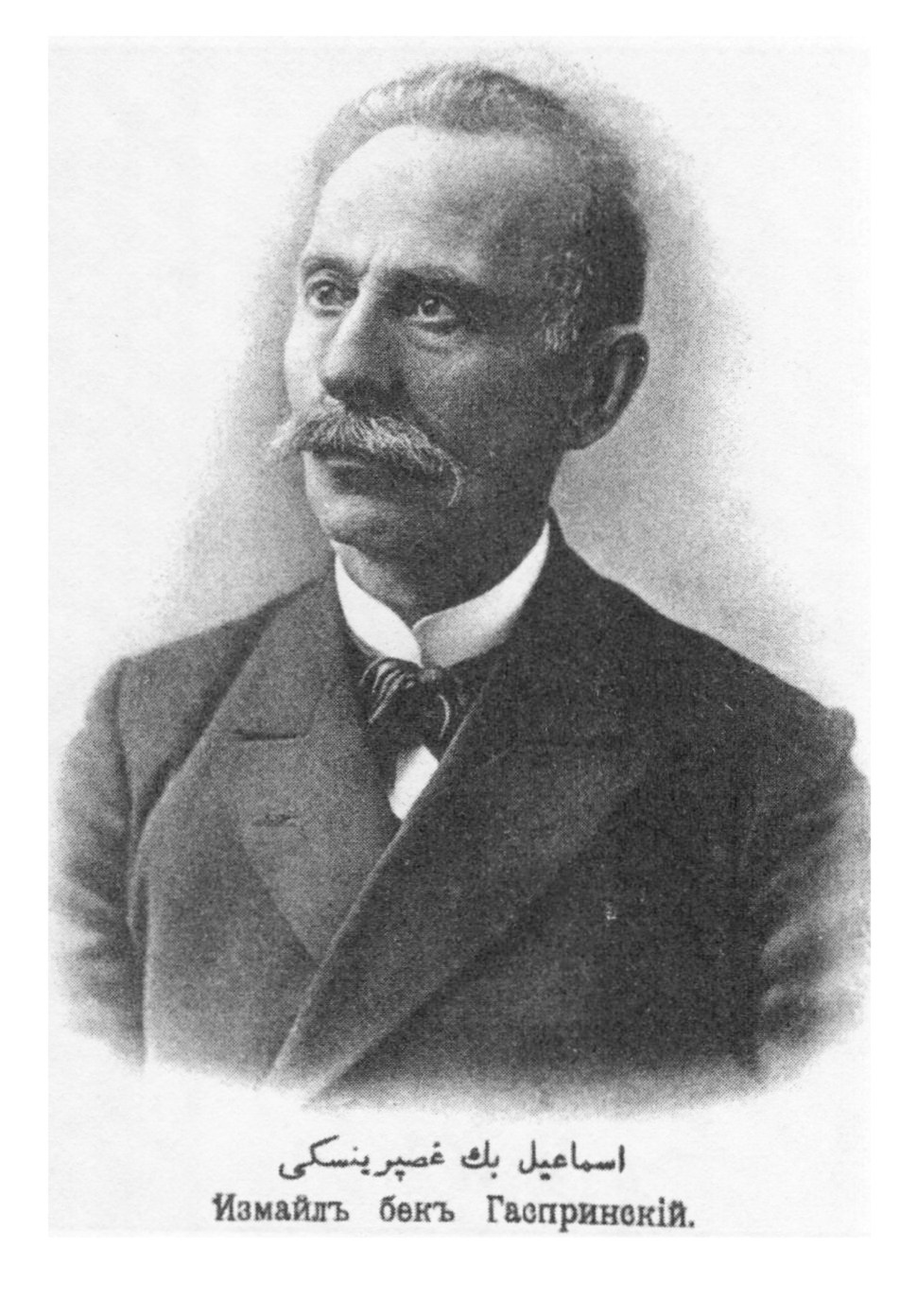
A Celebration of Ismail Gasprinskiy


Every year the birth date of the great Crimean Tartar writer and educator, Ismail Gasprinskiy, is celebrated in Crimea. Born March 21, 1851 (though some sources report his birth date as March 8), Ismail Gasprinskiy had a profound influence on Crimean Tatar life at the beginning of the twentieth century, and today is considered “the father of the modern Crimean Tatar nation.”

This year, the Gasprinskiy Library, the Ministry of Culture and Arts in Crimea, and the Gasprinskiy Memorial Museum in Bakhchiseray, came together to produce a series of celebrations dedicated to the memory of Ismail Gasprinskiy. In the tradition of memorial events in Ukraine, at the beginning of the celebrations flowers were laid at the monument to Gasprinskiy located on the Salgir River in Simferopol. The nearby city of Bakhchiseray (location of Gasprinkiy’s home and seat of the Crimean Khanate in the 16th-18th centuries) hosted two days of literary readings called “The World of Ismail Gasprinskiy.”

In Simferopol our library created a special display of books by and about Ismail Gasprinskiy and hosted a book presentation of Refat Shakir Aliyev’s Eight Steps in the Footsteps of a Teacher—a collection of articles about Gasprinskiy’s philosophy. As a special addition to the event, a live conversation via Skype was held with the author from his home in Perth, Australia.

On the library website, there is a beautiful tribute to Ismail Gasprinskiy by renowned Crimean Tatar poet, Shakir Selim. Despite the limitations of depending on a translation through google and my poor Russian, I wanted to share it with you:

"O you who pierced the darkness of night, a Great man.
You in the world of the Turks, stood as the sun and returned the light of hope.
When it seemed that the course of life very much slowed down,
You gave a dream, you gave Faith and the wisdom covenant."

--Shakir Selim

Friday, March 16, 2012

Gasprinskiy Library Launches Fundraising Campaign

The Gasprinskiy Library has announced a fundraising marathon called the “Kindness Campaign.” It is hoped that the fundraising campaign, running from March 1, 2012 to January 1, 2013, will help the Library move forward in their mission to preserve and revive the Crimean Tatar language and culture.

Liliya Kaderova, Deputy Director of the Library, announces the fundraising campaign at March 14th press conference in the Reading Hall.
As an institution of the Ukrainian government, the Library is severely underfunded and struggles to maintain even basic services. In order for them to pursue their mission, it is necessary to raise funding from outside sources.

Three major problems will be addressed by this campaign:
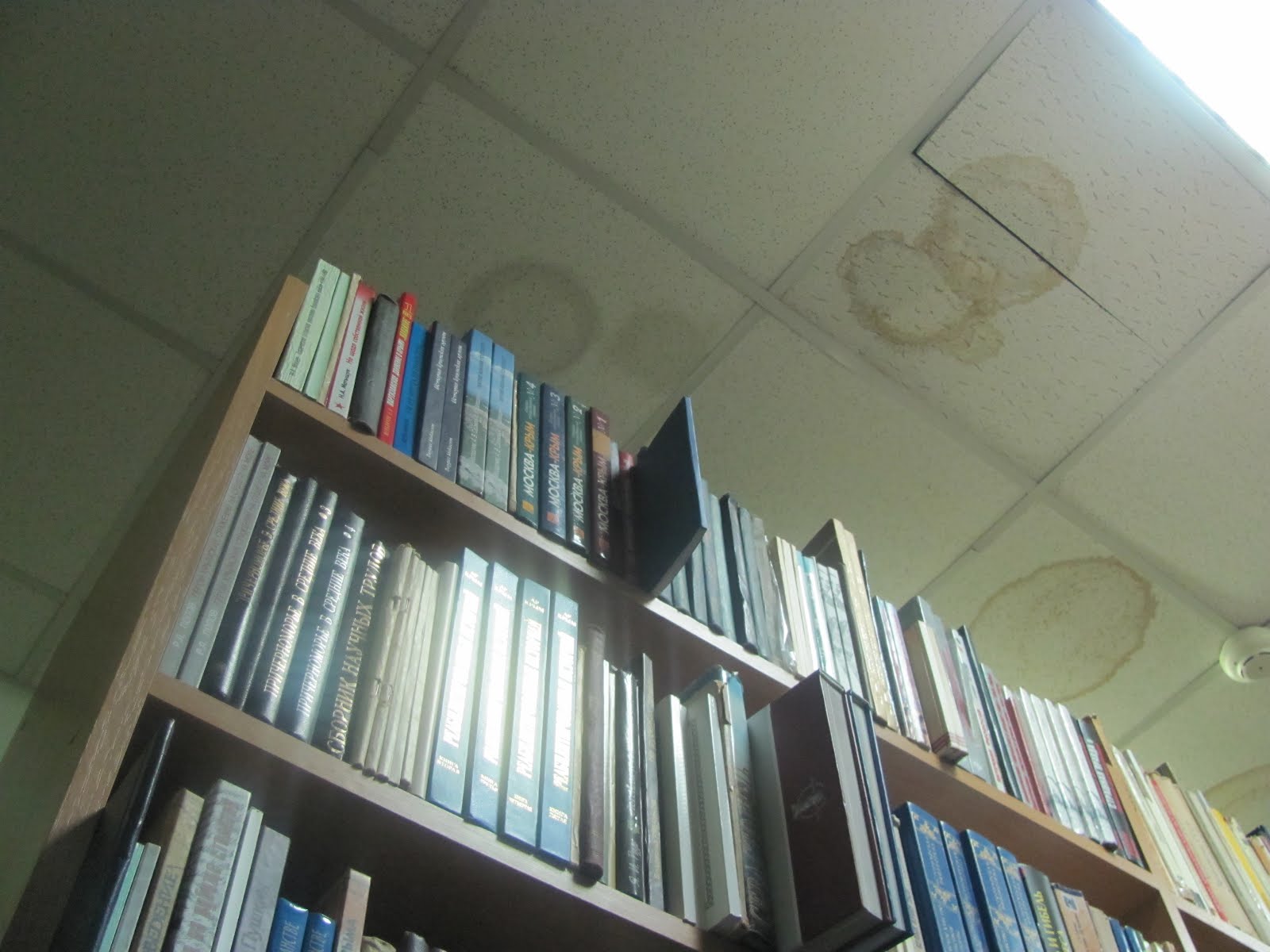
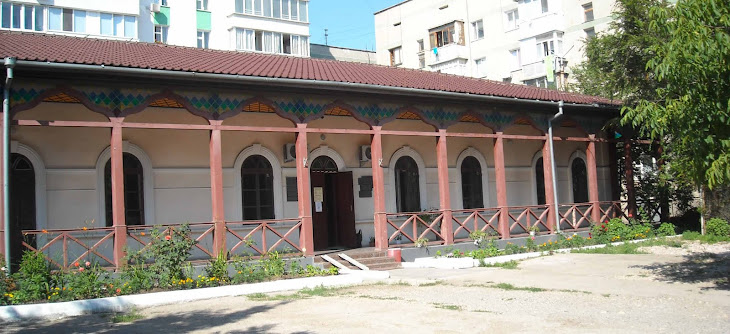
1. The deteriorating condition of the library building. The library building is an architectural monument from the 16th - 19th centuries. The oldest part of the building, on the south side, was built in the 16th century and the main building in the 19th century. Until 1910 the building housed a medrese (Islamic school). The building is typical old Crimean architecture – a brick, single-story building with a pitched tiled roof. Under the house are extensive vaulted cellars. Due to lack of funding from the state budget to perform repair and restoration work, the building is slowly disintegrating. The roof leaks in several places, the walls are cracking, and the storage vaults are in poor condition. Furthermore, there is no space to accommodate the full document collection of the library. (See photos below)

2. No funds for acquisition. At this time, the library is dependent on donations to expand their collections. There are no funds in their budget to acquire the documents needed to complete their collections—such as Ismail Gasprinskiy’s newspaper Terdjiman, of which the library only has approximately 30%--and new publications relevant to Crimean Tatar language, history, and culture.

Masthead of Ismail Gasprinskiy's newspaper Terdjiman.
3. Lack of access to their language and culture by the inhabitants of the over 300 remote Crimean Tatar communities spread across the peninsula. To solve this pressing need, the Gasprinskiy Library would like to purchase a “bibliobus” (bookmobile) which they would operate in partnership with the Ministry of Culture.

A bookmobile in America.

For the next ten months, the Library is planning monthly events to promote their fundraising campaign, including performances at the Crimean Tatar Drama Theater, musical concerts, poetry readings, and art exhibits, with the proceeds going to the Library. You can read the full press release (in Russian) under Pages on this blog.

Underground vault of the library where many books are stored.


Leaking ceiling in the stacks area of the library.

Crack in the wall of the Reading Hall.
Thursday, March 1, 2012

International Mother Language Day at the Gasprinskiy Library

On February 21st, the Gasprinskiy Library held an event marking International Mother Language Day. The International Mother Language Day was established by the General Conference of UNESCO in November 1999 to promote linguistic and cultural diversity and has been observed internationally every year since February 2000. The date represents the day in 1952 when students demonstrating for recognition of their language, Bangla, as one of the two national languages of the then Pakistan, were shot and killed by police in Dhaka, the capital of what is now Bangladesh.

“Languages are the most powerful instruments of preserving and developing our tangible and intangible heritage.” (UN announcement of International Mother Language Day 2012)
The Crimean Tatars know this only too well. The state of their language is considered the most pressing problem facing Crimean Tatars today. It is estimated that only 5% of Crimean Tatar children speak their mother tongue and Crimean Tatar is now listed in the UNESCO Red Book of Disappearing Languages as “severely threatened.”

One of the main missions of the Gasprinskiy Library is the preservation and revitalization of the Crimean Tatar language. In recognition of the importance of the International Mother Language Day, the library organized a large event held in the Reading Hall of the library. Co-sponsored by the Ministry of Culture and Education, the Crimean Tatar Writers’ Union, and the Association of Crimean Tatar Educators, the event drew over fifty people from many different areas of Crimean Tatar life. There was a roundtable discussion of the book exhibition “Language—the Greatest Wealth of the People,” and representatives from the media, League of Crimean Tatar Women, Crimean Tatar youth organizations, and directors of the Crimean Tatar national schools talked about the specific work they are doing to preserve and revive the language and their plans for the future. Throughout the event, the audience was entertained by music from old and young Crimean Tatar performers.

Director of the Gasprinskiy Library, Gulnara Yagyaeva, along with Crimean Tatar writer Riza Fazel and Crimea Rada Deputy Cafure Kadzhametova, open the event.

Leilya Kaderova, Deputy Director of the Gasprinskiy Library, gives an overview of the book exhibition "Language--the Greatest Wealth of a People".

Shevket Eunucov, Director of the Department of Crimean Tatar Literature at Tavrida National University in Simferopol
Rada Deputy Cafure Kadzhametova introduces the Russian-Tatar Thematic Dictionary.
Safinar Jemileva, President of the Crimean Tatar Women's Association.
Server Bekirov, journalist.
Rustem Memetov, Crimean Tatar artist and singer.

Tuesday, February 21, 2012

Polish professor donates book to the Gasprinsky Library


We are very excited about the donation of a recent book to the English language collection of our library. I had read about Polish professor Dariusz Kolodziejczyk’s new book, The Crimean Khanate and Poland-Lithuania, and wrote him to ask if he would consider donating a copy to our library. He graciously agreed, and when I visited Poland two weeks ago, there was a package from him waiting for me at my hostel. I carried it through the remainder of my trip to Poland and the Czech Republic, and only when I returned to the library did I have the opportunity to really examine his book. What a rich treasure it is of information about the Crimean Khanate who ruled Crimea from the 15th to the late 18th century and their relationships with the other countries of the times. I look forward to when I will have more time to thoroughly read Professor Kolodziejczyk’s book.

Below is information from the publisher about The Crimean Khanate and Poland-Lithuania and author Dariusz Kolodziejczyk. The book can be ordered from Brill Academic Publishers.

This is an extensive study, supplemented by an edition of relevant sources, of the diplomatic contacts between Poland-Lithuania and the Crimean Khanate between the early 15th and the late 18th century. It contains a chronology of mutual relations, a formal analysis of various types of documents, and a glimpse into the working of the Crimean chancery, where Genghisid and Islamic forms mixed with those borrowed from Christian Europe.
The book provides a fascinating insight into the intercultural exchange between Catholic Poland (with Latin and then Polish as the main chancery language) and predominantly Orthodox Lithuania (with Ruthenian as the main chancery language) on the one hand, and the Muslim Crimean Khanate (with Khwarezmian Turkic and then Ottoman Turkish as the main chancery language) on the other. It depicts Eastern Europe as a zone of contact, where the relations between Slavs and Tatars were by no means always hostile.

Dariusz Kołodziejczyk, Ph.D. (1990) in History, University of Warsaw, is Professor of Early Modern History at the University of Warsaw and at the Polish Academy of Sciences. He has published extensively on the Ottoman Empire and its relations with Eastern Europe including Ottoman-Polish Diplomatic Relations (15th–18th Century): An Annotated Edition of ‘Ahdnames and Other Documents (Brill, 2000) and The Ottoman Survey Register of Podolia (ca. 1681) (Harvard University Press, 2004).