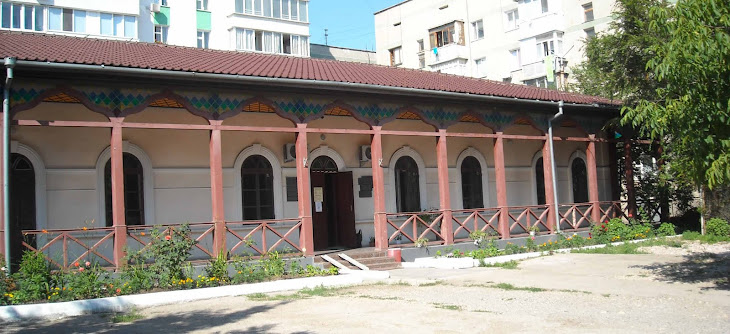
I have spent the last two weeks working on translating the Library’s 5-Year Plan (called a “Concept” here) into English. I do not have the language skills to do Russian translations, so I depend on Google translate, hope it is somewhat correct, and then rewrite the translation so it is understandable for English readers. Sometimes when I don’t understand what is translated, I try other online programs and ask my fellow workers here at the library, but even so, I do know much gets “lost in translation.” However, I think that at least in this case, the major ideas came through.
I have added the translated 5-Year Plan to the Pages on my blog, but here are a few highlights. The Plan clearly states the library's mission: “The I. Gasprinsky Crimean Tatar Library is responsible for the preservation, growth, and transfer to present and future generations, of the intellectual wealth, native language, and culture of the Crimean Tatars,” or more simply, “the keeper of the memory of the Crimean Tatar people.” To continue to fulfill this mission, a number of directions for the library are presented: preservation and digitizing of historic documents; bringing the library into the “electronic age” with increased development of its online presence; improving the library environment to make it more user friendly and accessible to the disabled; maintenance and needed repairs to the library building, which is a historical monument; construction of additional book storage; reaching out to the remote Crimean Tatar settlements; promoting ethnic tolerance across the peninsula. For elaboration of these ideas and to find out other interests of the library, please read the 5-Year Plan. It is also available in the original Russian on the library’s website.
I will be gone from Crimea for the next two weeks, first to a training in Kyiv sponsored by the Peace Corps on HIV/AIDS prevention, which I am attending with my counterpart from the Orlova Children’s Library in Simferopol where I work one day a week. Following the training, I will be going to the Carpathian Mountains in western Ukraine to attend a “close of service” conference with my fellow Peace Corps Volunteers who are ending their service in June of this year. I have elected to stay an additional year but am still required to attend the conference. And it will be a chance to see the beautiful Carpathian Mountains in the winter.
Thursday, February 10, 2011


Thursday, February 3, 2011
New book at the library: A Nomad's Journey

I am sorry I haven’t written a post lately. The month of January at the library has been taken up with producing and presenting a 5-Year Plan (called a Concept here) for the library. I am now in the process of working on a translation into English and will give highlights of the plan in my next blog post.
I am on the list serve of the International Committee for Crimea, and it gives me the opportunity to read information in English about Crimea, Crimea Tatars, and the Crimean Tatar diaspora. Recently I read a review of a new book and, as I often do when coming across a book I think would be a valuable addition to the library’s collection, I wrote the author and asked him to donate a copy of his book to the library. The author graciously complied, and the book arrived today. As always, the library staff was very happy to receive a new book for their English collection of works by and about Crimean Tatars. The book is A Nomad’s Journey by Atilla Bektore, who is now a resident of Florida. Written in English, it is the incredible story of Atilla Bektore and his father Shevki Bektore and their lives in Crimea, Russia, Turkey, and the United States.
Here is a description of the book from the back cover:
Born in Dobruja, Rumania in 1888, Shevki Bektore dreams of being a teacher in his ancestral land of the Crimea. When the horrifying events of the World War I alters his plans, he joins countless millions of others whose hopes and dreams are shattered in maelstrom of war and revolution. Arrested on a trumped up charge of treason, Shevki spends fourteen years of his life in Stalin’s Gulag in Central Asia and eight years in exile in Siberia.
Told within the context of contemporary world events, A Nomad’s Journey focuses on major milestones of world history that include World War I and the fall of world empires, the birth of Bolshevik Russia, World War II, demise of the Soviet Union, and the rise of the United States as the sole world power.
Shevki’s compelling story of survival, combined with his son’s endurance in the face of the World War II, Stalin’s iron rule, and the turmoil of the 1960s and 1970s, creates a stunning memoir of these two extraordinary men.
You can read excerpts from the book on the author’s website, www.bektore.com. A Nomad’s Journey can be ordered from amazon.com and through your local independent bookstore. I look forward to reading it!
Tuesday, January 4, 2011
Volunteerism Training Project
It is a snowy Tuesday morning here in Crimea, and we are in that week lull between the holidays of New Year’s and the Orthodox Christian Christmas on December 7th. Though it is a shortened work week, I am trying to be productive and am spending time thinking of the upcoming year and possible grants to fund library projects. In December, my partner at the library, Nadjie Yagya, and I submitted a draft proposal for a second SPA grant. Our first SPA grant (SPA stands for Small Project Assistance and is a USAID grant available to Peace Corps Volunteers worldwide) was a 2-day seminar in Simferopol in June of this past year on Crimean Tatar language and literature, and subsequent smaller seminars at twelve district libraries around Crimea, (see photos in previous blogs). We received many wonderful reviews from participants at those seminars and were encouraged to develop a proposal for a second SPA grant.
The idea for our second SPA grant came from a Peace Corps sponsored training Nadjie and I attended in August of 2009, soon after I arrived at my site in Simferopol. The training, which was held for three days in Kyiv, was titled “Volunteerism Strengthening as a Tool of Sustainable Grassroots Development,“ and focused on how to encourage volunteerism in our communities. At the training we learned about the history—or lack thereof—of volunteerism in Ukraine and were provided with successful strategies to recruit and manage volunteers. Nadjie came back from the seminar excited about the prospect of developing a project to encourage volunteerism in Crimea that would be spearheaded by the district libraries.
To put this project into action, we plan to organize a two-day training in Simferopol for librarians from the 23 central rayon libraries of Crimea, along with librarians from the four universities in Simferopol and also from some of the larger schools in the city. Participants at the seminar/training will be provided the information and tools necessary to assist them in organizing volunteer groups in their libraries and communities and to share with people the idea, as Nadjie expresses it in the grant application, “that volunteer work is not just working for someone else, but working for themselves, as it helps to solve the social problems that exist in our society.”
As a result of this seminar/training, we hope that the librarians will return to their institutions and organize “Friends of the Library” volunteer groups that are so common in American libraries and such a great help to them. Furthermore, in at least six of the communities represented, we will help the librarians organize a community-wide “Volunteer Day” to promote volunteerism in their region.
We submitted the first draft of the grant proposal in early December and with some revisions will submit the final proposal this month and will hear the first of February whether or not we receive the funding. The review committee was very encouraging, so I am optimistic that we will be funded. I will post the news on this blog.
 The Volunteerism Training in Kyiv in August 2009. Pictured are Peace Corps Volunteers and their counterparts from organizations all over Ukraine. Nadjie and I are standing in the first row.
The idea for our second SPA grant came from a Peace Corps sponsored training Nadjie and I attended in August of 2009, soon after I arrived at my site in Simferopol. The training, which was held for three days in Kyiv, was titled “Volunteerism Strengthening as a Tool of Sustainable Grassroots Development,“ and focused on how to encourage volunteerism in our communities. At the training we learned about the history—or lack thereof—of volunteerism in Ukraine and were provided with successful strategies to recruit and manage volunteers. Nadjie came back from the seminar excited about the prospect of developing a project to encourage volunteerism in Crimea that would be spearheaded by the district libraries.
To put this project into action, we plan to organize a two-day training in Simferopol for librarians from the 23 central rayon libraries of Crimea, along with librarians from the four universities in Simferopol and also from some of the larger schools in the city. Participants at the seminar/training will be provided the information and tools necessary to assist them in organizing volunteer groups in their libraries and communities and to share with people the idea, as Nadjie expresses it in the grant application, “that volunteer work is not just working for someone else, but working for themselves, as it helps to solve the social problems that exist in our society.”
As a result of this seminar/training, we hope that the librarians will return to their institutions and organize “Friends of the Library” volunteer groups that are so common in American libraries and such a great help to them. Furthermore, in at least six of the communities represented, we will help the librarians organize a community-wide “Volunteer Day” to promote volunteerism in their region.
We submitted the first draft of the grant proposal in early December and with some revisions will submit the final proposal this month and will hear the first of February whether or not we receive the funding. The review committee was very encouraging, so I am optimistic that we will be funded. I will post the news on this blog.
 The Volunteerism Training in Kyiv in August 2009. Pictured are Peace Corps Volunteers and their counterparts from organizations all over Ukraine. Nadjie and I are standing in the first row.
Tuesday, December 14, 2010
The Kadiaskerskie Books
Winter has finally come to Crimea with icy roads, frost covered trees, and a thin layer of snow turning the landscape into a winter wonderland. I am glad to hole up in the warmth of the library, and I spend much of my time researching and writing grants.
One of the grants I am currently working on is a “Partnership Grant” through the Peace Corps, which is basically a way to raise funds in the United States for a project at a Volunteer’s site. Though Nadjie and I haven’t yet finalized plans for this grant, one of the projects we are considering is trying to raise funds to purchase copies of the Kadiaskerskie Books from the National Library of Russia in St. Petersburg. The Kadiaskerskie Books are the court records of the “chief judges” (the Kadi Asker) of the Crimean Khanate, which was the ruling body of Crimea from 1440-1783. They contain the most comprehensive historical record of Crimean Tatar life on the peninsula, including records of civil and criminal court proceedings, spiritual testimonies, the execution of wills, and the costs of public works and buildings.
The Kadiaskerskie Books have an interesting history. In 1738, a fire destroyed most of the Khan palace in Bakhchisaray, the capital of the Crimean Khanate. The Kadiaskerskie Books were long thought to be totally lost, but in fact, 119 books survived and were brought by an employee of the Khanate to the Tauride provincial government and stored in its archives. They languished in obscurity until 1905 when a famous Russian orientalist scholar, Vasily Smirnov (1846-1922), surveyed the Kadiaskerskie Books and recognized their historical importance. He recommended that they be transferred to the National Library of Russia in St. Petersburg for safe keeping, which is where they are today, despite several attempts to return them to their land of origin.
However, early photocopies of 61 of the Kadiaskerskie Books remain in Crimea, and even these have had a colorful history. Initially, they were housed in the Crimean History Museum. But one day, sometime after the Deportation of the Crimea Tatars, an employee of the nearby Crimean State Archives, Antonina Stepanova, stopped by the museum and realized that rare Crimean Tatar books, including copies of the Kadiaskerskie Books, were being used to stoke the boiler fire. She quickly ransomed the books with a bottle of vodka as payment, and took them to the State Archives for safe keeping. In late 1991, the question arose about sending the books back to the museum. However, they were rescued once again when a Crimean Tatar employee of the museum said, “Why send them back to a place where they suffered such a fate? Rather, they should go to the Gasprinskiy Library.” And so, the copies of the 61 Kadiaskerskie Books found a home in the Gasprinskiy Library where they are used to this day by researchers, scholars, and students of Crimean Tatar history and culture.
The copies of the Kadiaskerskie Books at the Gasprinskiy Library, covering the years 1648-1751.

The books are written in the Crimean Tatar language, using the Arabic alphabet.

However, these 61 books represent only a partial collection of the surviving Kadiaskerskie Books. One of the main missions of the Gasprinskiy Library is to be the central repository of books and documents by and about Crimean Tatars: a place where researchers, scholars, and the general public can come and learn about who the Crimean Tatar people are; a place where Crimean Tatar people can reclaim their history, language, and culture. To this end, a complete collection of copies of the Kadiaskerskie Books is crucial to fully understanding not only Crimean Tatar history and culture, but the history of the Crimean peninsula as a whole.
But of course, such a collection does not come without a price, and it is to fund this acquisition that we are considering the writing of a Partnership Grant. Currently, we are awaiting a reply from the St. Petersburg Library as to whether or not obtaining such copies is even possible, and if so, what the cost would be. I will post further information on this project as it develops.
Medine Alimova from the Archives Department at the Gasprinskiy Library holds one of the Kadiaskerskie Books.

Much of the information in this blog post is taken from an article written by Gasprinskiy librarian, Nadjie Tairova.

One of the grants I am currently working on is a “Partnership Grant” through the Peace Corps, which is basically a way to raise funds in the United States for a project at a Volunteer’s site. Though Nadjie and I haven’t yet finalized plans for this grant, one of the projects we are considering is trying to raise funds to purchase copies of the Kadiaskerskie Books from the National Library of Russia in St. Petersburg. The Kadiaskerskie Books are the court records of the “chief judges” (the Kadi Asker) of the Crimean Khanate, which was the ruling body of Crimea from 1440-1783. They contain the most comprehensive historical record of Crimean Tatar life on the peninsula, including records of civil and criminal court proceedings, spiritual testimonies, the execution of wills, and the costs of public works and buildings.
The Kadiaskerskie Books have an interesting history. In 1738, a fire destroyed most of the Khan palace in Bakhchisaray, the capital of the Crimean Khanate. The Kadiaskerskie Books were long thought to be totally lost, but in fact, 119 books survived and were brought by an employee of the Khanate to the Tauride provincial government and stored in its archives. They languished in obscurity until 1905 when a famous Russian orientalist scholar, Vasily Smirnov (1846-1922), surveyed the Kadiaskerskie Books and recognized their historical importance. He recommended that they be transferred to the National Library of Russia in St. Petersburg for safe keeping, which is where they are today, despite several attempts to return them to their land of origin.
However, early photocopies of 61 of the Kadiaskerskie Books remain in Crimea, and even these have had a colorful history. Initially, they were housed in the Crimean History Museum. But one day, sometime after the Deportation of the Crimea Tatars, an employee of the nearby Crimean State Archives, Antonina Stepanova, stopped by the museum and realized that rare Crimean Tatar books, including copies of the Kadiaskerskie Books, were being used to stoke the boiler fire. She quickly ransomed the books with a bottle of vodka as payment, and took them to the State Archives for safe keeping. In late 1991, the question arose about sending the books back to the museum. However, they were rescued once again when a Crimean Tatar employee of the museum said, “Why send them back to a place where they suffered such a fate? Rather, they should go to the Gasprinskiy Library.” And so, the copies of the 61 Kadiaskerskie Books found a home in the Gasprinskiy Library where they are used to this day by researchers, scholars, and students of Crimean Tatar history and culture.
The copies of the Kadiaskerskie Books at the Gasprinskiy Library, covering the years 1648-1751.

The books are written in the Crimean Tatar language, using the Arabic alphabet.

However, these 61 books represent only a partial collection of the surviving Kadiaskerskie Books. One of the main missions of the Gasprinskiy Library is to be the central repository of books and documents by and about Crimean Tatars: a place where researchers, scholars, and the general public can come and learn about who the Crimean Tatar people are; a place where Crimean Tatar people can reclaim their history, language, and culture. To this end, a complete collection of copies of the Kadiaskerskie Books is crucial to fully understanding not only Crimean Tatar history and culture, but the history of the Crimean peninsula as a whole.
But of course, such a collection does not come without a price, and it is to fund this acquisition that we are considering the writing of a Partnership Grant. Currently, we are awaiting a reply from the St. Petersburg Library as to whether or not obtaining such copies is even possible, and if so, what the cost would be. I will post further information on this project as it develops.
Medine Alimova from the Archives Department at the Gasprinskiy Library holds one of the Kadiaskerskie Books.

Much of the information in this blog post is taken from an article written by Gasprinskiy librarian, Nadjie Tairova.

Tuesday, November 23, 2010
English Class at the Library

One of the activities I have been doing at the Gasprinskiy Library since a few months after I came here, is to teach an English class to some of the Gasprinskiy staff members. Starting in September, we expanded the class a bit to include a volunteer and two staff members from the Krymchak Museum and preservation organization. Meeting twice weekly early in the morning before the library opens, my small English class is slowly learning conversational English, using a series of books from Oxford University Press called English for Life. I have never taught English before, but I find the experience very rewarding as my students—old and young—are so eager to learn. And as a person who is trying to learn Russian at the age of 62, I have much empathy for how difficult it is to learn a new language as you get older. Motivation becomes the key factor, I think, and that is something of which my students have an abundant supply.
On Thursday evenings, some of the group gathers at the Krymchak Museum, only a few blocks away, for an English “club,” in which we find ways to practice using English—games, telling stories, describing events, etc. Lately we have been playing a game that involves describing famous people, like the Russian poet Pushkin. I realized this could be a great opportunity for two groups of people—Crimean Tatars and Krymchak Jews—to learn more about each other’s culture and heroes. So I asked everyone to bring to our next meeting a description of a famous Crimean Tatar or Krymchak to share with the rest of the group. I look forward to what I, too, will learn at that meeting.
Visitors to the Library
 The 20th anniversary celebration at the library continues with visitors from other organizations and libraries. Last week, librarians from the Crimean Engineering and Pedagogical University in Simferopol (know locally as CEPU) paid a visit to library. Many of the women had previously worked at the library, and several of the library’s current staff had worked at CEPU, so it was a joyous occasion. Here we share coffee and sweets in the Reading Hall.
Monday, November 15, 2010
The last of our regional seminars
This past week we conducted the last of our regional seminars on Crimean Tatar language and literature, funded by a grant through the Peace Corps. We traveled to the far north of Crimea, first to the town of Krasnoperekopsk and then to Armansk. I was unable to go to the Krasnoperekopsk seminar, as it was scheduled on the one day a week that I work at the Orlova Children’s Library in Simferopol. Normally, I would change my schedule at the Children’s Library, but that week, one of my children’s English clubs at the library was putting on a Halloween skit. Needless to say, as “the director” of the play, I had to be there.
But the next day I was able to go with the other librarians to Armansk where we conducted a very well received seminar, and then afterwards, went on a short tour of the town, including a brief visit to their history museum. Once again, as with all the libraries we visited, I found the staff so gracious and hospitable, going out of their way to make us feel comfortable and welcomed. I will miss these weekly and sometimes bi-weekly visits to different libraries across Crimea. Though the time it took to travel that extensively meant I had to temporarily put aside other projects, I felt it gave me a sense of the diverse land and cultures of Crimea, and an appreciation of how devoted Crimean citizens are to their libraries. And it was also gratifying to have a better understanding of how wide spread the Crimean Tatar people are in Crimea, as in every community we visited there were sizeable populations of Tatars.
I feel our presence at the libraries had an impact—that it gave over 250 small libraries across Crimea information and materials to promote Crimean Tatar language and culture. And perhaps even more important, it gave the participants an opportunity to come together to discuss culture similarities and differences, hopefully leading to the longer range goal of increasing ethnic tolerance in Crimea.
Librarians from the villages surrounding Krasnoperekopsk listen to the presentations of the Gasprinskiy staff.
Participant at the Krasnoperekopsk seminar gives the result of her small group's translation of Russian proverb into Crimean Tatar.
At the seminar in Armansk, Alina from the Gasprinskiy Library talks about Crimean Tatar books while Susanna from the library looks on.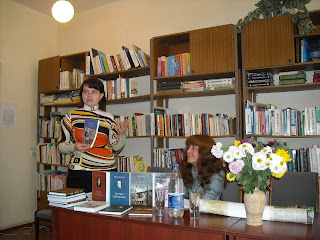
Participants at the Armansk seminar.
Nadjie guides participants in translation of the Russian proverb into Crimean Tatar and talking about the cultural differences and similarities.
Much laughter at the translation results.
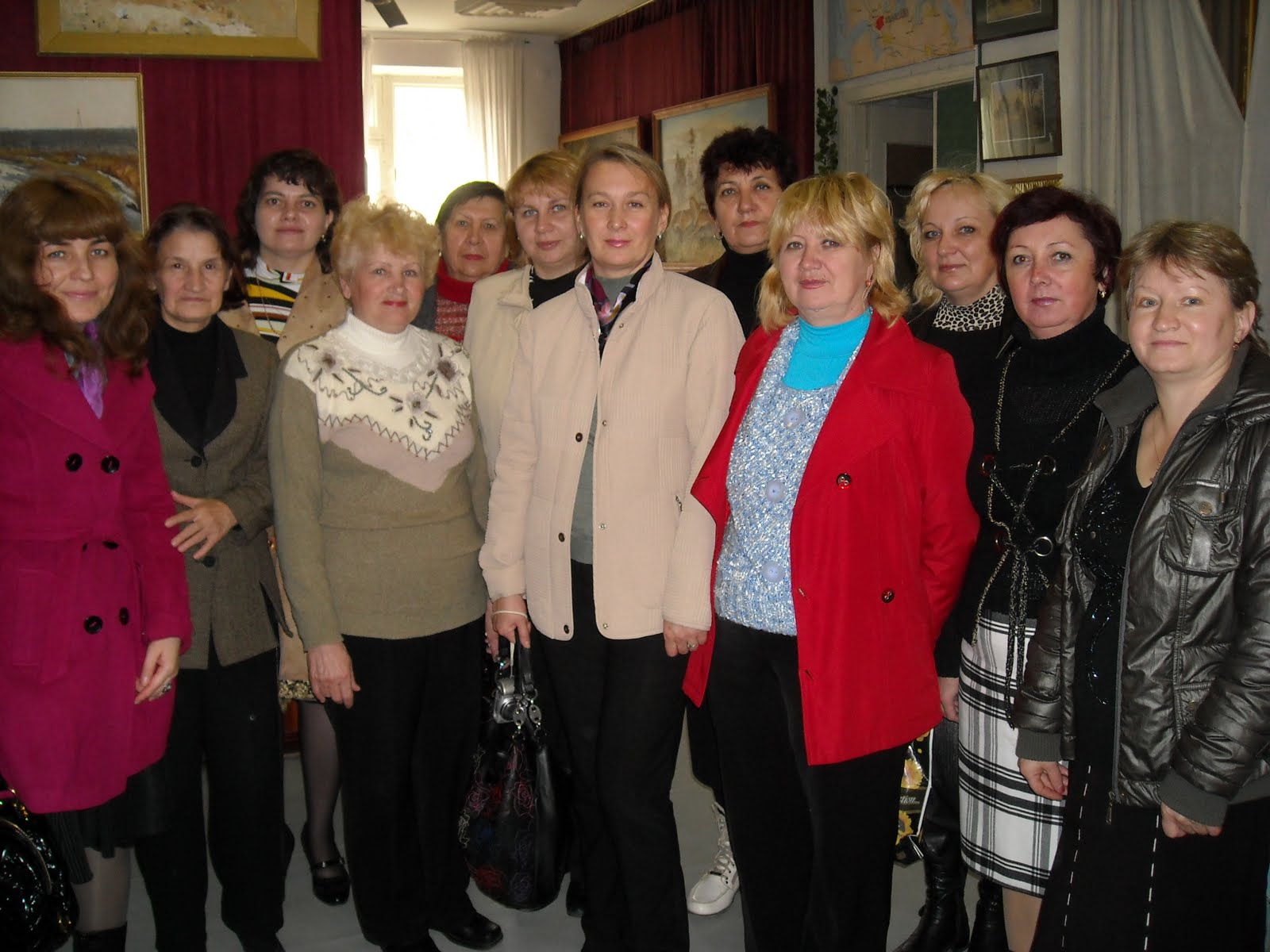
Staff of the Armansk Library and the historical museum in Armansk pose for a picture with Gasprinskiy staff.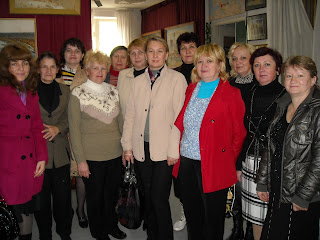
But the next day I was able to go with the other librarians to Armansk where we conducted a very well received seminar, and then afterwards, went on a short tour of the town, including a brief visit to their history museum. Once again, as with all the libraries we visited, I found the staff so gracious and hospitable, going out of their way to make us feel comfortable and welcomed. I will miss these weekly and sometimes bi-weekly visits to different libraries across Crimea. Though the time it took to travel that extensively meant I had to temporarily put aside other projects, I felt it gave me a sense of the diverse land and cultures of Crimea, and an appreciation of how devoted Crimean citizens are to their libraries. And it was also gratifying to have a better understanding of how wide spread the Crimean Tatar people are in Crimea, as in every community we visited there were sizeable populations of Tatars.
I feel our presence at the libraries had an impact—that it gave over 250 small libraries across Crimea information and materials to promote Crimean Tatar language and culture. And perhaps even more important, it gave the participants an opportunity to come together to discuss culture similarities and differences, hopefully leading to the longer range goal of increasing ethnic tolerance in Crimea.
Librarians from the villages surrounding Krasnoperekopsk listen to the presentations of the Gasprinskiy staff.

Participant at the Krasnoperekopsk seminar gives the result of her small group's translation of Russian proverb into Crimean Tatar.

At the seminar in Armansk, Alina from the Gasprinskiy Library talks about Crimean Tatar books while Susanna from the library looks on.

Participants at the Armansk seminar.

Nadjie guides participants in translation of the Russian proverb into Crimean Tatar and talking about the cultural differences and similarities.

Much laughter at the translation results.

Staff of the Armansk Library and the historical museum in Armansk pose for a picture with Gasprinskiy staff.
Tuesday, November 9, 2010
The Library celebrates 20 Years with an International Conference
September 24, 2010, marked the 20th anniversary of the founding of the Gasprinsky Library, the first Crimean Tatar library. In celebration of this anniversary and also the 120th anniversary of the birthdate of the famous Turkologist, Ahmet-Zaki Validi Togan, the Gasprinsky Library and the international organization TURKSOY, presented a two-day conference in Simferopol and Bakhchisarai on November 4th and 5th.
Guests came from the national libraries of Azerbaijan, Kazakhstan, Turkey, the Kyrsyz Republic, and the Russian republics of Bashkortostan and Tatarstan. Also present was the daughter of Ahmet-Zaki Validi Togan, Isenbike Togan, who is a professor at the Middle East Technical University in Istanbul. It turns out she is a fluent English speaker, having obtained her Ph.D. at Harvard, and lived for a number of years in my hometown of St. Louis, Missouri, so we had much to talk about.
Besides the guests from the Turkic speaking countries, experts from Tauride National University and Crimean Engineering and Pedagogical University in Simferopol also presented papers, along with staff from the Gasprinsky Library.
Topics at the conference included: The Role of Libraries in the Revival and Development of Crimean Tatar Education and Culture; the Development of Cooperation in the Culture Heritage of Turkic-speaking Countries; and Turkic National and Social-political Identity in the First Quarter of the 20th Century. Several papers were presented on Ahmet-Zaki Validi Togan including: The Influence of Admet-Zaki Validi Togan on Tatar Culture; Admet-Zaki Validi Togan’s Life and Work and The 120 Years Since the Birth of Ahmet-Zaki Validi Togan. His daughter, Isenbike Togan, spoke about Ahmet-Azki Validi Togan “My Father and Teacher.”
On the first day of the conference, a celebratory reception was held at the Gasprinsky Library, an event the library had been preparing for for over a month. “Sprucing up” projects had been occurring for days—the windows and trim on the front veranda were painted; the Reading Hall was revived with a fresh coat of paint and framed photographs of the history of the library; each department created new displays for the hallway information panels; and a beautiful collection of photographs of the paintings of renown Crimean Tatar artist Erfan Hafiev was hung in the hallway.
Guests came from libraries across Simferopol and Crimea to present tributes to the Gasprinsky Library on its 20th anniversary. Though I did not understand all the speeches, the obvious appreciation of the library and the work it has done came through loud and clear, despite the language barrier. And perhaps my favorite moment was when two singers led everyone in heartfelt traditional Crimean Tatar songs. And of course, the celebratory glass of wine I shared with my counterpart, Nadjie. I felt so honored to be part of this event.
Representatives from the Ministry of Culture, Orlova Children's Library, and Franco Library welcome guests to the celebration.
The Reading Hall at Gasprinsky Library is packed with guests.
Ayder Emirov, until recently director of the Gasprinsky Library for most of its twenty years, talks about the founding of the library.
Representatives from the Central Library in Alushta and other Crimean libraries present tributes.
The foreign guests are introduced.
Isenbike Togan talks about her father as Nail Akramovich Kambeev, Director of the National Library of Tatarstan, and Daribaeva Gulshat Gabdullaevna, Deputy Director of the National Academic Library in the Republic of Kazakhstan look on.
Nail Akramovich Kambeev presents a gift to the library.To the left are Tunzhel Azhar, Director of the National Library of Turkey, and Antonina Gezikova, Deputy Director of the National Libary of Ahmet-Zaki Validi Togan.
The audience is led in singing by Crimean Tatar national singer, Rustem Memetov.
Afterwards, guests share conversation and champagne. Here is Ahat Salikhov, Minister of Culture of the Republic of Baskortostan, and Fevzi Yakubov, Rector of the Crimean Engineering and Pedagogical University in Simferopol.
My counterpart, Nadjie Yagya, and I celebrate.
Guests came from the national libraries of Azerbaijan, Kazakhstan, Turkey, the Kyrsyz Republic, and the Russian republics of Bashkortostan and Tatarstan. Also present was the daughter of Ahmet-Zaki Validi Togan, Isenbike Togan, who is a professor at the Middle East Technical University in Istanbul. It turns out she is a fluent English speaker, having obtained her Ph.D. at Harvard, and lived for a number of years in my hometown of St. Louis, Missouri, so we had much to talk about.
Besides the guests from the Turkic speaking countries, experts from Tauride National University and Crimean Engineering and Pedagogical University in Simferopol also presented papers, along with staff from the Gasprinsky Library.
Topics at the conference included: The Role of Libraries in the Revival and Development of Crimean Tatar Education and Culture; the Development of Cooperation in the Culture Heritage of Turkic-speaking Countries; and Turkic National and Social-political Identity in the First Quarter of the 20th Century. Several papers were presented on Ahmet-Zaki Validi Togan including: The Influence of Admet-Zaki Validi Togan on Tatar Culture; Admet-Zaki Validi Togan’s Life and Work and The 120 Years Since the Birth of Ahmet-Zaki Validi Togan. His daughter, Isenbike Togan, spoke about Ahmet-Azki Validi Togan “My Father and Teacher.”
On the first day of the conference, a celebratory reception was held at the Gasprinsky Library, an event the library had been preparing for for over a month. “Sprucing up” projects had been occurring for days—the windows and trim on the front veranda were painted; the Reading Hall was revived with a fresh coat of paint and framed photographs of the history of the library; each department created new displays for the hallway information panels; and a beautiful collection of photographs of the paintings of renown Crimean Tatar artist Erfan Hafiev was hung in the hallway.
Guests came from libraries across Simferopol and Crimea to present tributes to the Gasprinsky Library on its 20th anniversary. Though I did not understand all the speeches, the obvious appreciation of the library and the work it has done came through loud and clear, despite the language barrier. And perhaps my favorite moment was when two singers led everyone in heartfelt traditional Crimean Tatar songs. And of course, the celebratory glass of wine I shared with my counterpart, Nadjie. I felt so honored to be part of this event.
Representatives from the Ministry of Culture, Orlova Children's Library, and Franco Library welcome guests to the celebration.

The Reading Hall at Gasprinsky Library is packed with guests.

Ayder Emirov, until recently director of the Gasprinsky Library for most of its twenty years, talks about the founding of the library.

Representatives from the Central Library in Alushta and other Crimean libraries present tributes.

The foreign guests are introduced.

Isenbike Togan talks about her father as Nail Akramovich Kambeev, Director of the National Library of Tatarstan, and Daribaeva Gulshat Gabdullaevna, Deputy Director of the National Academic Library in the Republic of Kazakhstan look on.

Nail Akramovich Kambeev presents a gift to the library.To the left are Tunzhel Azhar, Director of the National Library of Turkey, and Antonina Gezikova, Deputy Director of the National Libary of Ahmet-Zaki Validi Togan.

The audience is led in singing by Crimean Tatar national singer, Rustem Memetov.

Afterwards, guests share conversation and champagne. Here is Ahat Salikhov, Minister of Culture of the Republic of Baskortostan, and Fevzi Yakubov, Rector of the Crimean Engineering and Pedagogical University in Simferopol.

My counterpart, Nadjie Yagya, and I celebrate.

Subscribe to:
Posts (Atom)

