Tuesday, November 27, 2012

Why save an endangered language?


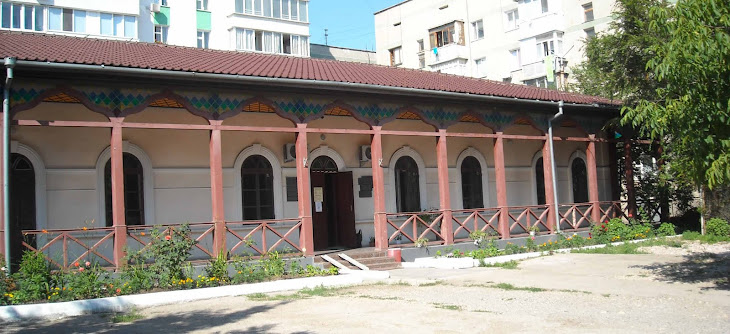
On November 5th, a roundtable was held at the library on the Crimean Tatar language. Bringing together experts from the Crimean Tatar Educators Union, the Crimean Tatar Writer’s Union, the Crimean Engineering and Pedagogical University, and the Verkhovna Rada (the Autonomous Republic of Crimea governing body), the purpose of the round table was to discuss the status of Crimean Tatar as an endangered language and what can be done to preserve it.

The roundtable started me thinking about why, exactly, is it important to preserve a language? Over the course of human history, thousands of languages have appeared and then disappeared. In the United States alone, 115 languages of the approximately 280 spoken at the time of Columbus, have been lost in the last five centuries. Today, according to UNESCO, there are about 6500 languages spoken in the world and at least half of those are under threat of extinction within the next 50 to 100 years.

The UNESCO Atlas of the World’s Languages in Danger has six classifications of language survival status, ranging from “safe” in which the language is spoken by all generations and intergenerational transmission is uninterrupted; to “extinct,” in which there are no speakers left. Crimean Tatar falls in the fourth classification, “severely endangered.” In this designation, “language is spoken by grandparents and older generations; while the parent generation may understand it, they do not speak it to children or among themselves.” The statistic often sited when discussing the current status of the Crimean Tatar language--that only 5% of Crimean Tatar children speak their mother tongue--certainly supports this classification. 

In a speech to the European Parliament in March, 2010, Mustafa Jemilev, head of the Mejlis of the Crimean Tatar people, said, “One of the most critical and, probably, key problems of the Crimean Tatar people is the problem of preservation of native language…”

And indeed, much of the work of Crimean Tatar organizations and institutions, such as the Gasprinskiy Crimean Tatar Library whose mission is “to preserve, grow, and transfer to present and future generations, the intellectual wealth, native language (emphasis mine), and culture of the Crimean Tatars,”   is oriented towards preserving and revitalizing the Crimean Tatar language. 

But why is language preservation so important? What will be lost if Crimean Tatars can no longer speak their native tongue? Around me I constantly hear Crimean Tatars speaking Russian, and indeed, many of the young Crimean Tatars I know are unable to speak more than a few words of Crimean Tatar. What would it mean if fifty or a hundred years from now, no one speaks Crimean Tatar? Would Crimean Tatars still exist as a people? 

The Hans Rausing Endangered Languages Project at University of London has this to say about language preservation:
“In many areas of the world, economic, military, social and other pressures are causing communities to stop speaking their traditional languages, and turn to other, typically more dominant, languages. This can be a social, cultural and scientific disaster because languages express the unique knowledge, history and worldview of their communities; and each language is a specially evolved variation of the human capacity for communication.”

It seems inconceivable that such an event would come to past, as there are now approximately 100,000 speakers of Crimean Tatar (according to the UNESCO Atlas). But if only 5% of those speakers are the children who will become the Crimean Tatar people of the future, then it is obvious how a language can disappear.

For Crimean Tatar people to no longer have access to a language their ancestors have spoken for hundreds of years would greatly diminish who they are as a people. Their songs would go unsung, their poetry only read by language scholars, the wealth of their literary heritage only known in translated form. As my counterpart at the library, Nadjie Yagya, said to me when I first came to the library: “If a person does not know the language of his ancestors, the spiritual losses are irreplaceable, and he cannot fully understand the culture of his people.”

And so the work to preserve the Crimean Tatar language becomes a fight for the survival of the Crimean Tatar people. The words of Evenki poet, Alitet Nemtushkin, about his endangered language ring true for the Crimean Tatar people:
·         If I forget my native speech,
And the songs that my people sing
What use are my eyes and ears?
What use is my mouth?
·         If I forget the smell of the earth
And do not serve it well
What use are my hands?
Why am I living in the world?
·         How can I believe the foolish idea
That my language is weak and poor
If my mother’s last words
Were in Evenki?
Moseley, Christopher (ed.). 2010. Atlas of the World’s Languages in Danger, 3rd edn. Paris, UNESCO Publishing.

For more information on endangered languages, see these websites:
Hans Rausing Endangered Languages Project SOAS University of London
 www.hrelp.org
Atlas of the World’s Languages in Danger

Monday, October 29, 2012

Gasprinskiy Library celebrates the arrival of the Terdjiman collection


October 24, 2012, was a special day at the library. With the help of a Peace Corps Partnership Grant and an individual named Renat Abibulaev, the Gasprinskiy Library was able to realize their long held dream of obtaining a complete collection of Ismail Gasprinskiy’s newspaper, Terdjiman.  Published from 1883 to 1918, Terdjiman was the first newspaper in Crimean Tatar history and became the most widely read newspaper among Muslims of the Russian empire. Islamic historian, Brian Glyn Williams, notes the importance of Terdjiman:
Crimean Muslim peasants who gathered before the village mosque to hear young students read aloud from the pages of Tercüman were, for the first time, exposed to events taking place beyond their immediate world. In the pages of Tercüman Gaspirali wrote of technical inventions in the United States of America, wars in the Balkans, the modernization of Japan, reform in the Ottoman Empire, the spread of European colonialism in Asia and Africa, the growing movement for women's rights in the West, etc

A number of years ago the library was able to acquire approximately 30% of Terdjiman on microfilm, but their attempts since that time to acquire the remaining 70% had been futile. When I first came to the library in 2009, researching ways to acquire the rest of Terdjiman became one of my initial tasks. The originals of Terdjiman are located in the National Library of Russia and microfilms of them are available, but tracking down where to purchase digital copies and how much they would cost was a daunting task. I went from the original supplier of the microfilms to the library, to the company who had later purchased the inventory (but whom never responded to my inquiries), and finally, directly to the National Library of Russia. There at least I did find some answers, but the costs of digital copies of Terdjiman were prohibitive and the copies were impossible to obtain long distance.

In the meantime, we wrote a Peace Corps Partnership Grant with the goal of at least digitizing the microfilms of Terdjiman that the library had in their collection and with the hope that perhaps a way would be found to acquire the entire collection.  Through the generosity of my American friends, family, and individuals I did not know but who saw the fundraising appeal on the Peace Corps website, over $4000 was raised for the project. (See Nov. 15, 2011 and subsequent posts).

Because we ended up raising $1000 more than our original goal, the library once again considered how to acquire a complete collection of Gasprinskiy’s newspaper. Fortuitously, Renat Abibulaev, a Crimean Tatar who is a Russian citizen and lives in St. Petersburg where the National Library of Russia is located, happened to be visiting our library at that time and offered to help us.  Through his diligent efforts over the next few months—frequent trips to the NLR, consultations with the librarians there as to the quality of the digital copies, meticulously attention to the necessary paperwork--the Gasprinskiy Library ultimately realized its long sought dream of having a complete collection of the Terdjiman newspapers. 


On October 24th, many people came to the library to celebrate this achievement and to thank Renat Abibulaev for his hard work and the American citizens who donated money to the project.  Present at the celebration were representatives from the Crimean government, the Mejlis of the Crimean Tatar people, Crimean Tatar elders, academics and historians, and individuals from the community, including the great granddaughter of Ismail Gasprinskiy. I felt fortunate to be part of this historic occasion and glad that a Peace Corps grant helped make it all possible.

I thank Renat and the donors to our project (my first public speaking in Russian!).
The beautiful voice of this young Crimean Tatar girl added to the celebration.
Cafure Kadzhametova, Crimean Rada Deputy, was one of the dignitaries on hand to congratulate the library.


Renat explains the process of acquiring the copies of Terdjiman.

Renat Abibulaev
Some of the forty plus Americans who donated to our project.


Tuesday, October 9, 2012

More photos from seminar on improving library access for the visually impaired.

Participants at the seminar in the Reading Hall of the Gasprinskiy Library.

After lunch, the participants gathered in front of the KrimTIZ building (formerly location of UTOS) for a tour of the facilities.

A participant feels a book in braille.

KrimTIZ member demonstrates a mechanism for writing in braille.

At the Gasprinskiy Library, Lilya Emirova demonstrates the new computer in the internet center with JAWS for Windows.

MAgic Window software on the computer.

MAgic Window magnifies google search.

Inproving Library Services for Visually Impaired People


On October 4th, the Gasprinskiy Library hosted a seminar, “Improving Library Services for Visually Impaired People,” funded by our third Peace Corps Small Program Assistance (SPA) grant.  We partnered on this grant with KrimTIZ, a local NGO that advocates for visually impaired people and UTOS, which is a Ukrainian-wide organization that provides jobs and rehabilitation for visually impaired people.

Librarians from the central libraries across Crimea attended the seminar, along with librarians from the libraries at the UTOS centers in seven Crimean cities. The participants heard from experts on the topic of working with visually impaired people and also had a chance to see the adaptive software JAWS for Windows which is a screen reading program and Magic Windows which magnifies the display. Through the SPA grant, we were able to purchase these programs and also computers with oversize monitors for our internet center and the newly created internet center (funded by our project) at KrimTIZ. 

At the end of the seminar, the participants decided to prepare an appeal to the Crimean government and the private sector to provide practical help to people with visual impairment. A great success!

Here are some photos from the seminar:
From left to right: Ivan Lutov, Deputy Director of UTOS, Leonid Jigalo, Director of KrimTIZ, and Gulnara Yagyaeva, Director of the Gasprinskiy Library, welcome the participants to the seminar.

Lilya Emirova, Head of Information Technology at Gasprinskiy, talks about Gasprinskiy Library programs for the visually impaired and the recent conference in Kherson.

Elena Brova, head librarian at the UTOS center in Simferopol, shows some of the information available at the library.

Psychologist from the Simferopol School for the Visually Impaired, Natalia Chechel, gives pointers on working with visually impaired children and adults.

Seminar participants enjoy a coffee break on the library's veranda.

Constantin Benimovich, teacher at the School for the Visually Impaired,

Andrei Ermolenko, teacher of computer literacy at UTOS, provides information on computer access for the visually impaired.